TRAINING RESOURCES · LINE WORK
How to Build Clean, Consistent Line Work
A clean line is the product of three controls working together: the speed of your hand, the tension of the skin and the depth of the needle. This guide explains each one, the problems that show up when they drift, and how to practise so they hold steady.
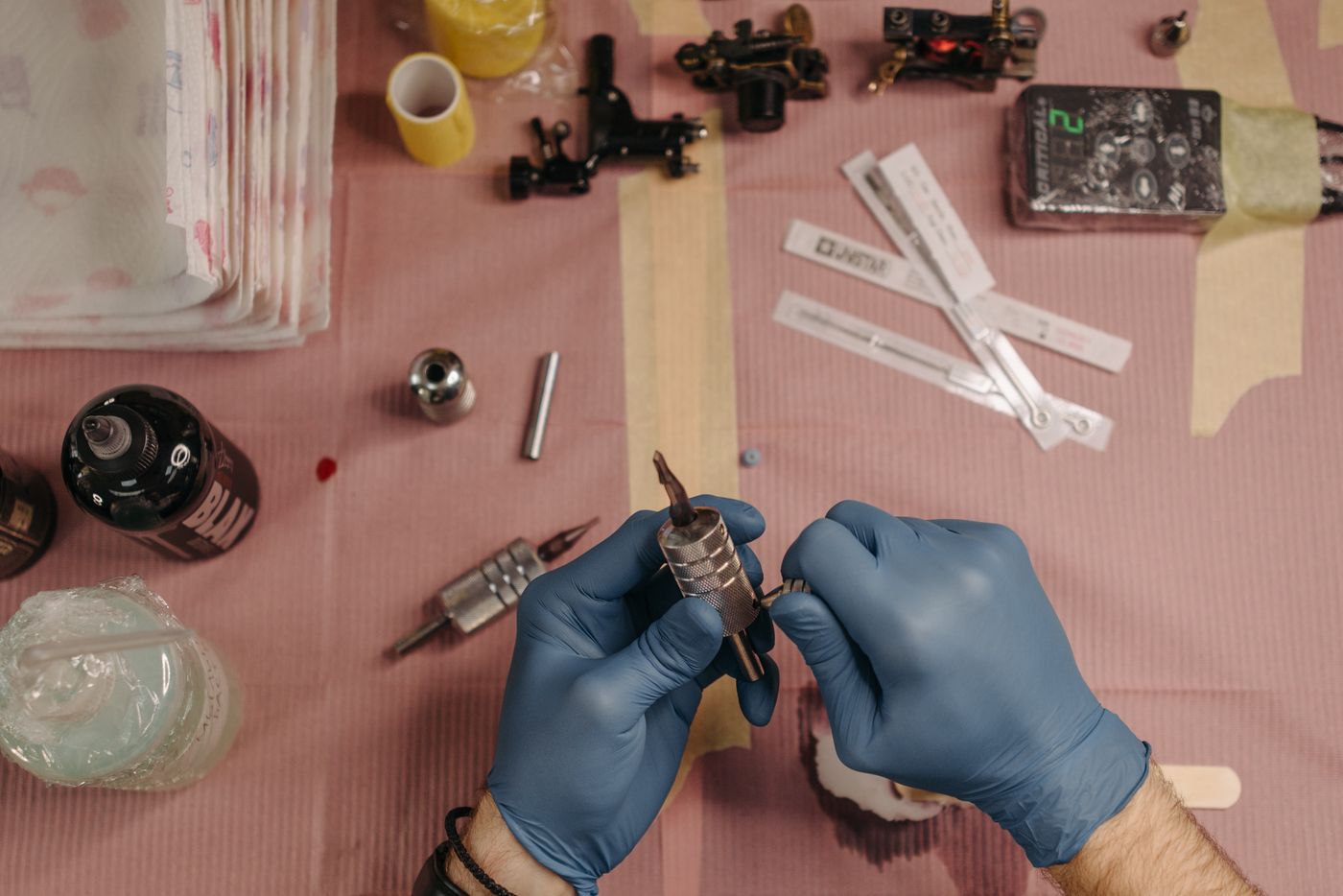
Reference image: preparing a machine before a line work session.
A
The three controls behind every line
When a line fails, one of these three has usually slipped. Learn to check them separately before judging the whole line.
Hand speed
Skin stretch
Skin that moves under the needle produces wobbles. A firm, even stretch with the free hand gives the needle a flat, predictable surface. Too little and the line drags; too much and the design can distort when the skin relaxes. Stretch along the direction of travel, and reset your grip before the skin shifts rather than halfway through a curve.
Depth control
B
Common line problems and what causes them
Most faults in fine line work are readable. Look at the line closely and it usually tells you which control drifted.
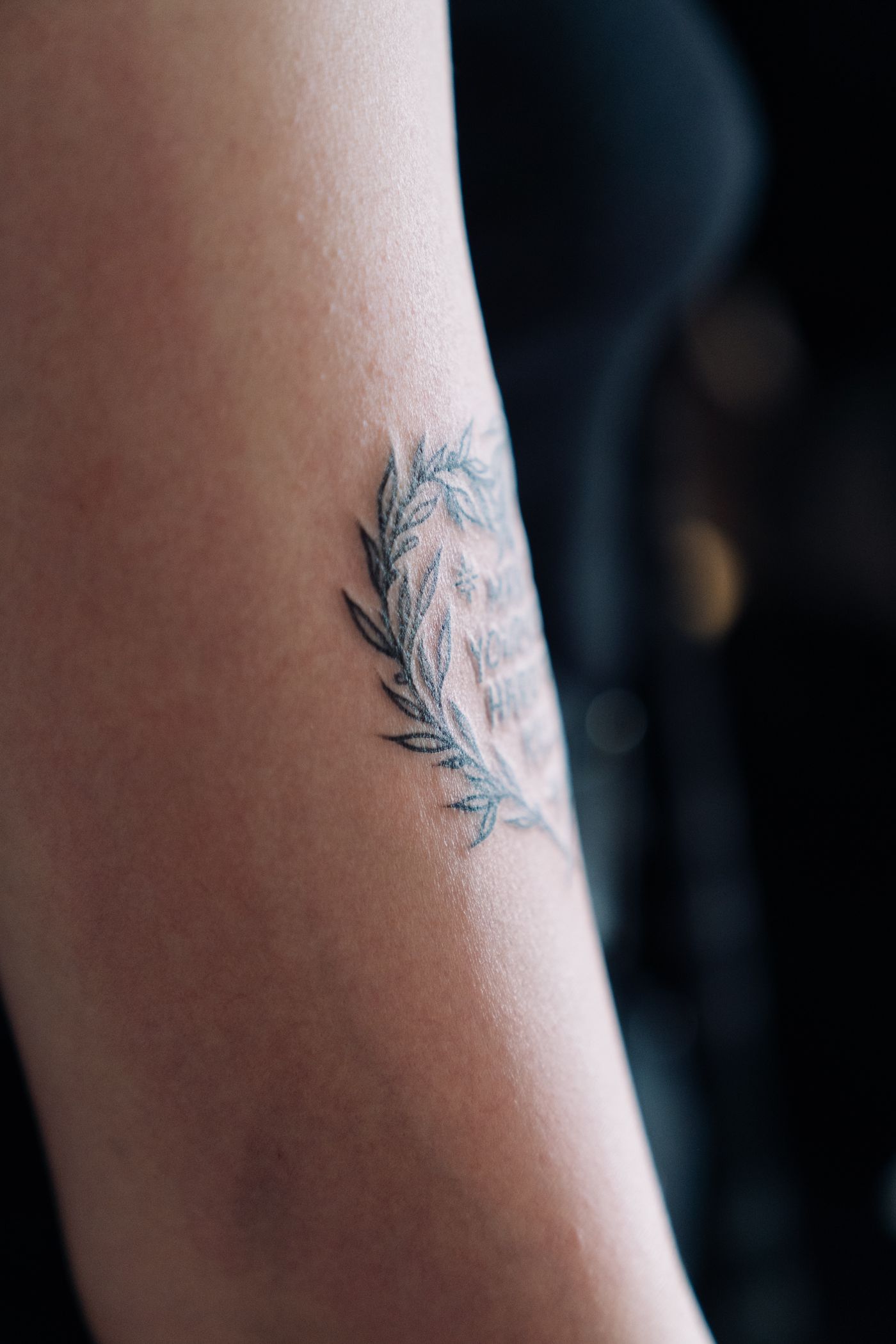
Reference image: delicate botanical fine line work.
Blowouts
A blowout shows as a soft, blurred halo along a line, where ink has spread under the skin. It is commonly linked to excessive depth, a steep needle angle or overworking the same pass. Prevention matters most, because a blowout cannot simply be tattooed over.
Shaky lines
Wobbles usually trace back to an unsupported hand, a stretch that slips mid-line, or hesitation partway through. Plan where the line starts and finishes, set your anchor point, then commit to one smooth pull.
Skipping or patchy lines
Gaps often mean the hand is moving faster than the machine can deposit ink, the needle is running too shallow, or the stretch is uneven. Slow the pass slightly and check the machine setup before assuming the problem is your hand.
Uneven thickness
C
How to practise line work
A PRACTICE SEQUENCE
1Draw first. Straight lines, circles and long curves on paper with a fine liner, keeping pressure even from start to finish.
2Move to practice skin. Pull single straight lines in one pass, then curves, then parallel lines at equal spacing.
3Change one variable at a time. Adjust speed, stretch or angle separately so you can see what each one does.
4Review in good light. Check every line for width, gaps and edge quality, and photograph sheets to compare over time.
5Keep sessions short and focused. A tired hand repeats mistakes; stop while lines are still clean.
6Get eyes on your hand. A trainer watching you work can spot an anchor or stretch problem that the finished line only hints at.
D · WHERE TO TRAIN IT