07
COURSE REGISTER · ENTRY 07
Needle & Technique Training
Choosing the right cartridge, then holding the angle, speed and depth that let a fine line heal the way it was drawn.
OVERVIEW
Where a fine line is really decided
A good design and a well-tuned machine still depend on two things at the point of contact: the needle you load and the way your hand moves it. Too wide a grouping and a delicate script thickens. Too shallow and the line fades patchily as it heals. Too deep and ink spreads under the skin.
This course focuses on that point of contact. You learn how needle groupings and configurations behave in fine line work, why cartridge choice changes with the design, and how hand angle, hand speed and depth work together to produce a line that is crisp on the day and holds up once healed.
It sits between Tattoo Machine Training, which covers the equipment, and Line Work Training, which builds consistency through repetition.
WHO IT IS FOR
Learners who know their machine and now need to understand what goes in it
Tattooists whose lines blow out, fade or wobble and want to find the cause
Artists moving from bolder styles into single-needle and small-scale work
Anyone preparing for the Advanced Fine Line Tattoo Course
SKILLS & TECHNIQUES
Four variables, read together
Each is taught on its own first, then combined on practice surfaces until the adjustments become habit.
i · GROUPINGS
Liners, shaders and single needles
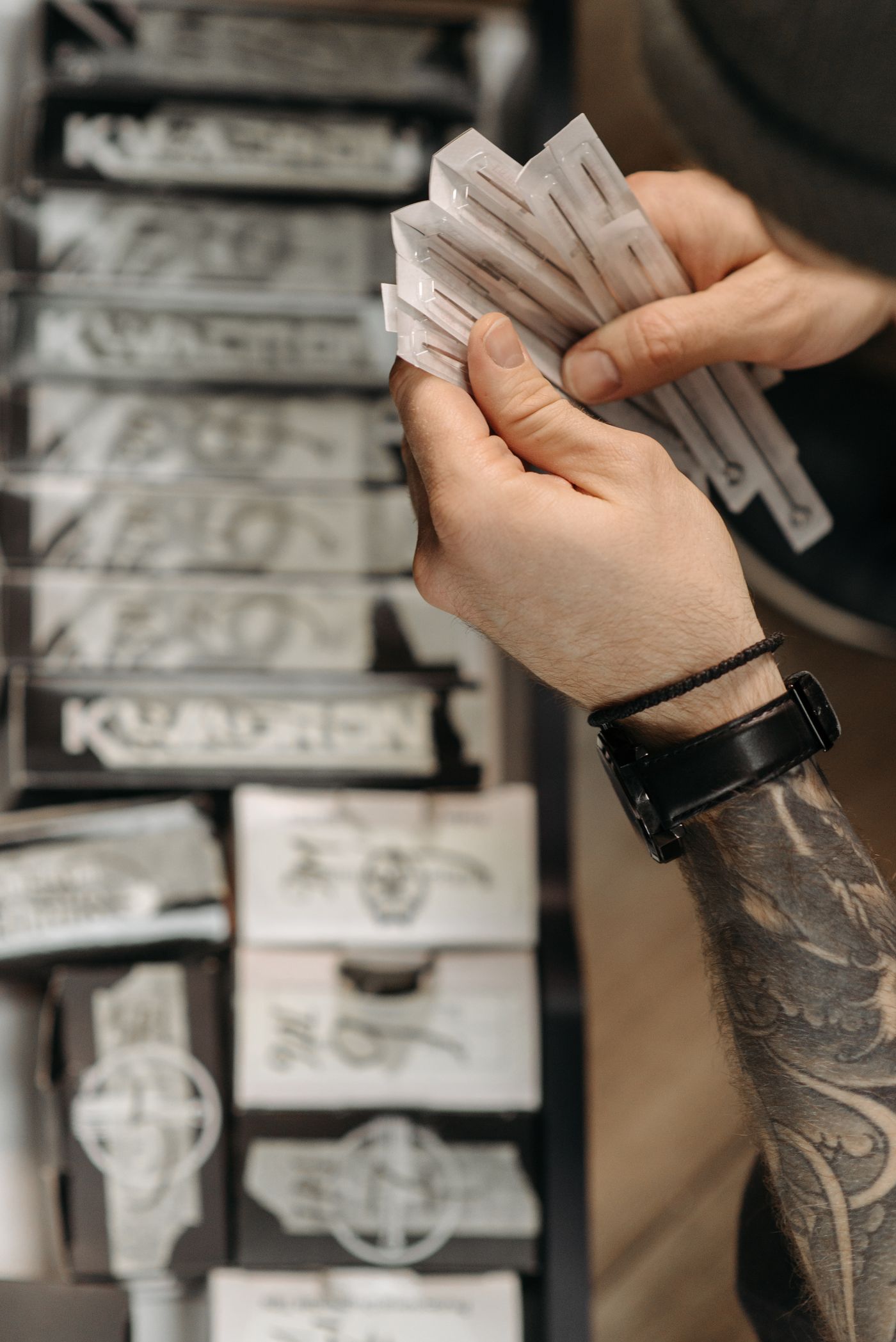
How round liner groupings differ from shaders and magnums, when a single needle suits script or micro detail, and how grouping size affects line weight.
ii · CONFIGURATIONS
Diameter, taper and tightness
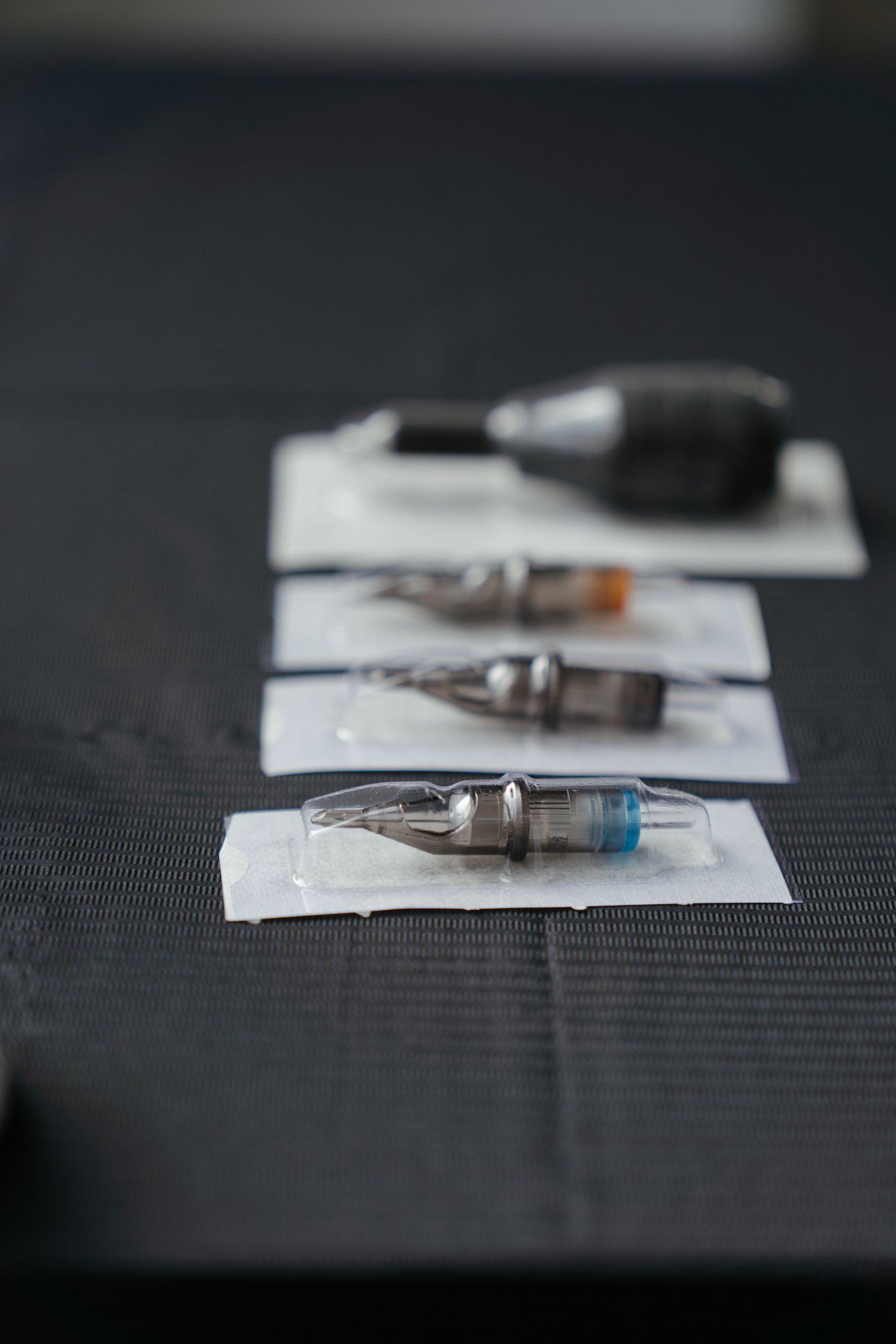
Reading cartridge labels, understanding needle diameter and taper, and matching a configuration to the design rather than habit.
iii · HAND ANGLE
A consistent angle to the skin
Holding the machine steady through curves, bracing the hand, stretching the skin and keeping the angle constant as direction changes.
iv · SPEED & DEPTH
Pace and pressure in balance
Matching hand speed to machine speed, recognising signs of working too shallow or too deep, and avoiding blowouts and patchy healing.
STRUCTURE & FORMAT
How the entry is worked through
1 — Identify. Handle and compare cartridges, and learn what each grouping and configuration is designed to do.
2 — Isolate. Practise angle, speed and depth one at a time on practice surfaces.
3 — Combine. Pull straight lines, curves and small script with all four variables working together.
4 — Review. Read your own lines for wobble, weight changes and inconsistent depth, then adjust.
Hygiene runs through every stage, from opening a sealed cartridge to disposal. Duration, training format and inclusions are confirmed for each intake when you enquire.
Read how training is approached on the Trainers page, and see reference work in the Student Work Gallery.
Do I need machine experience first?
Familiarity helps, because technique depends on how the machine runs. If you are starting out, Tattoo Machine Training or the Beginner Fine Line Tattoo Course is the natural first step.
Is fine line always done with a single needle?
No. Single needles suit very small detail and script, but many fine line pieces use small round liner groupings. Choosing between them for each design is a core part of this course.
Why do fine lines blow out or fade?
Usually it comes down to depth, often made worse by an unstable angle or a hand speed that doesn’t match the machine. The course teaches you to recognise each cause. The techniques article introduces the basics.
06 · RELATED ENTRY
Tattoo Machine Training
Setup, handling and tuning, the foundation beneath every needle choice.
05 · RELATED ENTRY
Line Work Training
Repetition that turns sound technique into clean, consistent lines.
03 · RELATED ENTRY