TRAINING RESOURCES · FINE LINE TECHNIQUES
Fine Line Tattoo Techniques Explained
Fine line tattooing looks effortless when it’s done well. Underneath it are a few exact techniques: steady single-needle strokes, controlled shading and careful spacing. Each one affects how a tattoo heals and how it holds up over time.
SCOPE OF THIS ENTRY
A
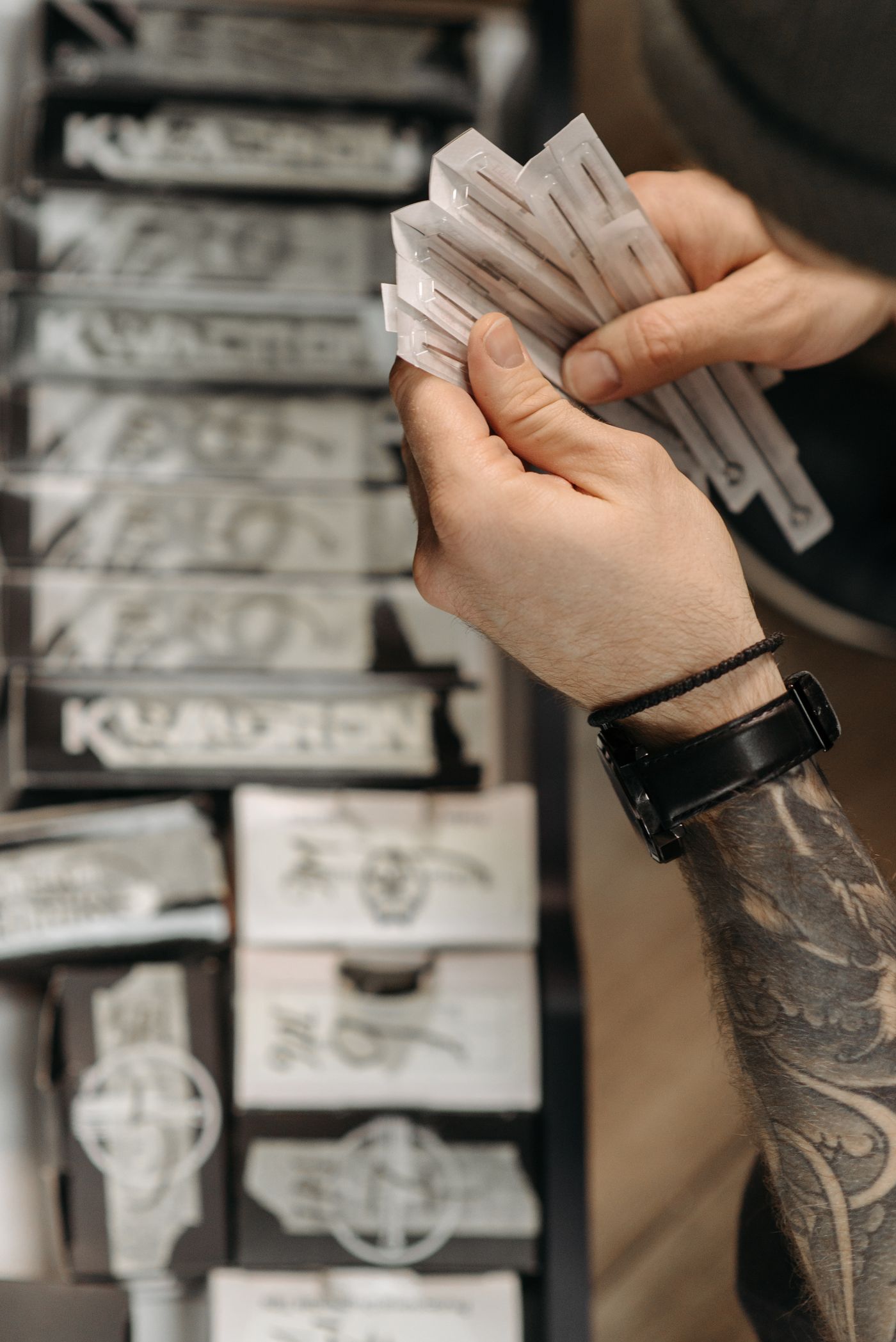
Single-needle and tight groupings
Fine line work usually relies on very small needle groupings: a single round liner or a tight small liner. A small grouping puts down a narrow channel of ink, which gives the style its drawn-with-a-pen look. It also leaves very little room for error. A single-needle line has no bulk to hide a wobble, a change in speed or uneven depth.
WHAT TO PRACTISE
Keeping your hand speed even on long strokes
Holding an even skin stretch from start to finish
Keeping depth consistent on practice skin
Pulling lines while keeping the stencil in view
B
Whip and stipple shading basics
Fine line shading is usually light. It adds depth and soft tone without heavy packing, and the two basic methods build that tone in different ways.
METHOD · MOTION
Whip shading
A flicking, pendulum-like motion lifts the needle out of the skin at the end of each pass. Pigment sits heavier where the stroke starts and fades where it lifts. Layering passes builds a soft gradient. The method depends on rhythm, because an irregular flick shows up as streaks.
Suits: smooth fades, petals, soft shadow under line work
METHOD · DOTS
Stipple shading
Here, tone is built from individual dots. Density sets the value: tightly packed dots read darker, and scattered dots read lighter. Stippling adds texture and depth with a light touch. Dot spacing and depth still have to stay consistent, or the gradient looks like an accident.
Suits: dotwork texture, celestial pieces, gradual tonal edges
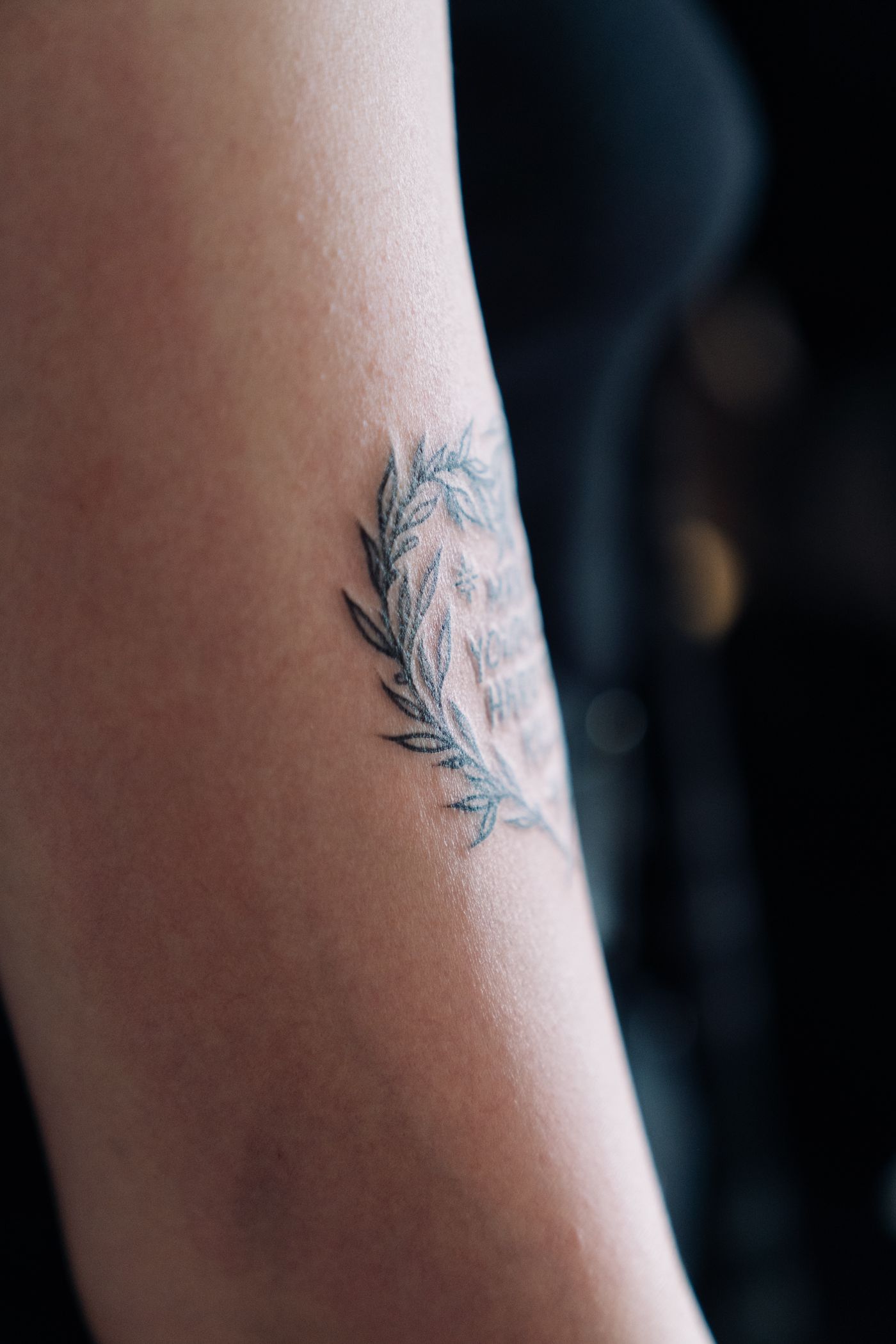
Reference image: a botanical fine line tattoo.
C
Detail, scale and spacing
Fine line designs often tempt you to add more detail than the skin can hold at that size. Ink settles over the years, so lines placed very close together can soften and start to merge. That makes the open skin between lines as important as the lines themselves.
D
How style choices affect healing and longevity
Every technique choice you make in the chair shows up again in the healed tattoo. These are the questions worth working through.
Why does fine line work change as it heals?
Thin lines carry very little ink. Small differences in depth or pressure, which are hard to see on the day, can show up as faint or broken sections once the skin settles.
Does placement matter?
Yes. Areas that flex, rub or get a lot of sun wear differently from protected areas, and delicate work shows that wear sooner. Good placement advice is part of the technique.
Can shading help a design last?
Used lightly, whip or stipple shading gives a design tonal structure, so it doesn’t rely entirely on single thin lines. Too much shading packed into small areas can do the opposite and make the design look muddy.
What can the artist actually control?
CONTINUE THE PRACTICE
Where these techniques are taught
COURSE · FOCUS
03Advanced Fine Line Tattoo Course
Refining single-needle work, shading and detail on top of your existing skills.
07Needle & Technique Training
Choosing needles and applying technique for clean fine line results.
RELATED READING