
TRAINING RESOURCES · FINE LINE TRAINING
What Fine Line Tattoo Training Involves
What the style asks of your hand, the skill areas underneath it, and why good training teaches them in a deliberate order.
01
WHAT THE STYLE DEMANDS
A style with nowhere to hide
Fine line tattooing relies on single, thin lines rather than bold outlines and heavy shading. That restraint is what makes the work look delicate, and it is also what makes it unforgiving. A wobble, an uneven depth or a line that stops short is visible immediately, because there is no thick outline or packed black to cover it.
The style also depends on how skin behaves after the session. Lines that are placed too deep can spread, and lines placed too shallow can fade unevenly. Designs that look crisp on paper may close up if details are packed too tightly. Learning fine line work therefore means learning to design, set up and tattoo with healing in mind, not only with the finished photo in mind.
02 · THE CORE SKILL AREAS
Four skill areas, one practice
Hygiene & safety
Infection control, barrier use and safe station habits that protect every client and artist.
Machines & needles
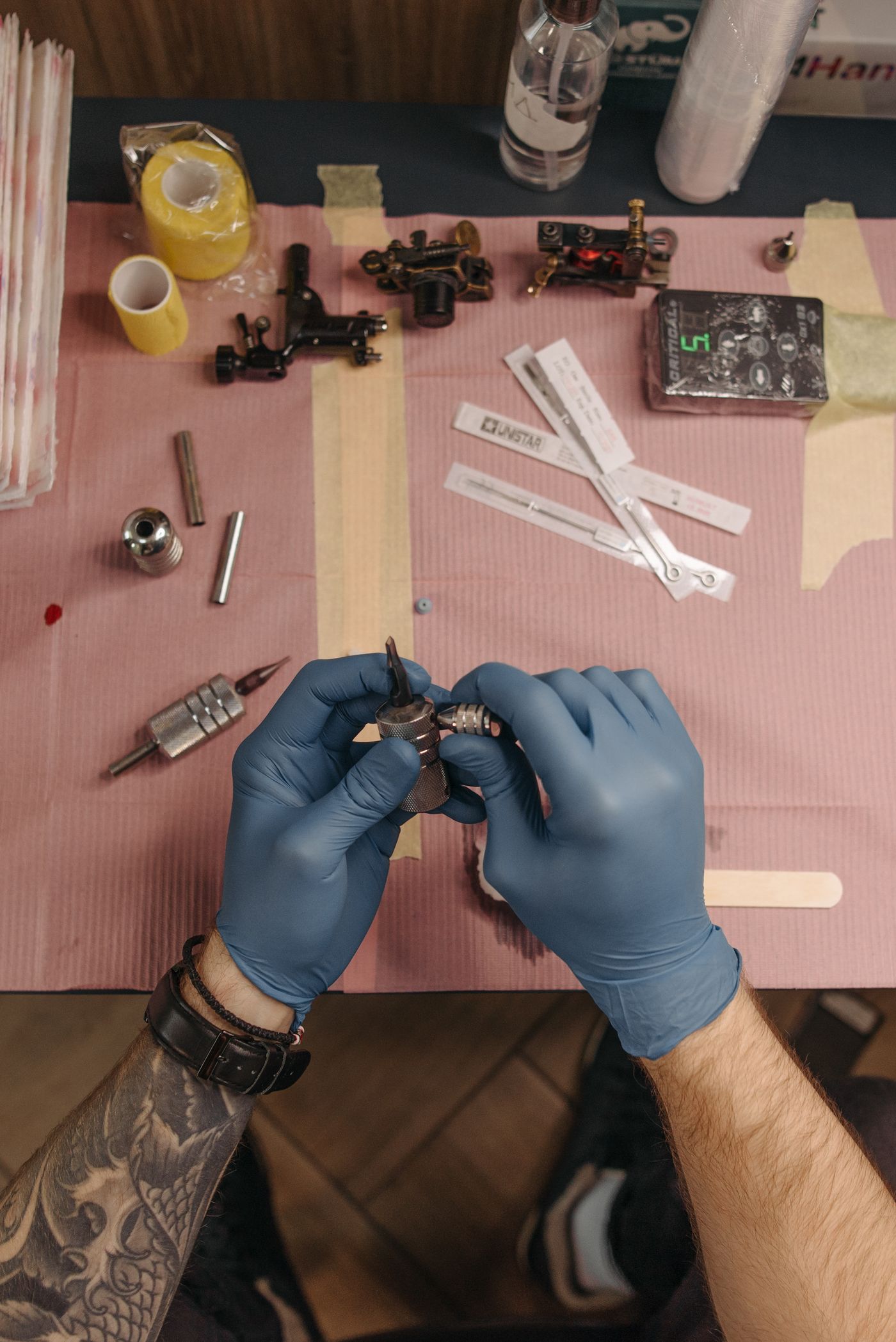
Setting up and handling the machine, and matching needle choice to the line you want.
Line work
Steady hand speed, consistent depth and clean starts and finishes on straight lines and curves.
Design
Composition, spacing and scale that suit thin lines and the part of the body they sit on.
03 · HOW TRAINING BUILDS THEM
Why the order matters
Structured training treats these skills as a sequence, because each one depends on the one before it. Skipping ahead usually means relearning habits later.
Safe station first. Hygiene habits are set before anything touches a surface, so they become automatic rather than an afterthought.
Know the tools. Machine set-up and needle choice are understood so the equipment is predictable in your hand.
Line before image. Straight lines, curves and consistent depth are practised until they are repeatable.
Design for skin. Composition is refined with an understanding of how fine lines age, then brought together in complete pieces.
04
WHERE TO START
Choosing your first entry
New to tattooing?
The Beginner Fine Line Tattoo Course is the entry point for people starting from the ground up, where safe practice, tools and first lines come before finished pieces.
Want the full picture of the style?
The Fine Line Tattoo Course covers professional fine line training as a whole, drawing the skill areas above into one practice.
Already working and refining?
The Advanced Fine Line Tattoo Course builds on existing skills. For a wider comparison, read How to Choose a Tattoo Course or browse the full course register.
FURTHER READING
Make an enquiry
Unsure which course suits your starting point? Enquire or enrol, or send a question through our contact page.